

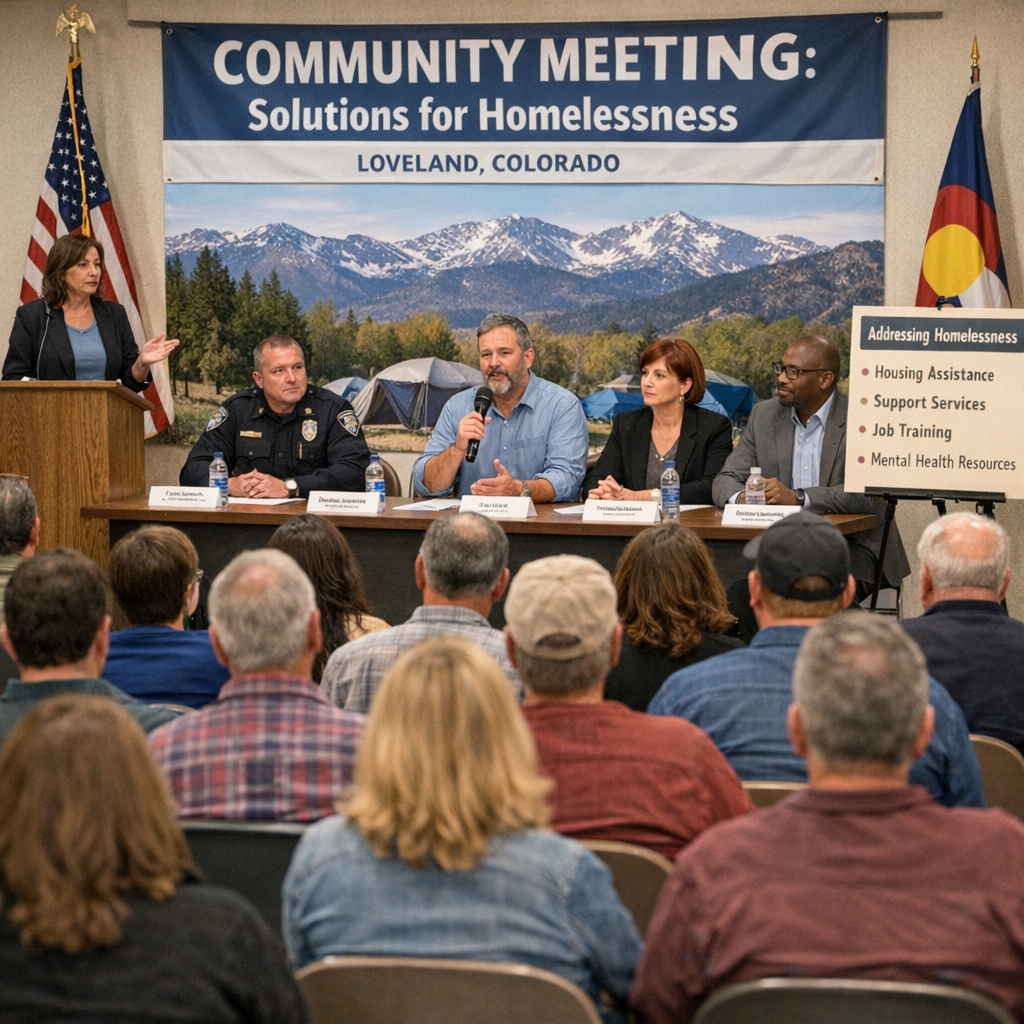
In recent years, Loveland has been reevaluating its strategies to address homelessness, transitioning from city-operated shelters to collaborative community partnerships.
Transition from City-Operated Shelters
Historically, Loveland was unique in Colorado for directly owning and managing both daily and overnight shelter services. However, by early 2026, the city recognized the challenges of sustaining this model. In January 2026, the City Council voted to purchase a new facility in northwest Loveland for a homeless shelter, contingent on a third-party operator. Unfortunately, the selected organization withdrew due to capacity constraints, leading the city to abandon the purchase and plan to close the existing South Railroad Facility. This decision was influenced by funding limitations and the recognition that the city could no longer manage shelter services alone. Source
Embracing Community Partnerships
In response, Loveland has been actively engaging with nonprofit organizations, faith groups, businesses, residents, and medical providers to develop long-term, community-driven solutions. The focus has shifted towards prevention, including access to affordable housing and supportive services. This collaborative approach aims to create a sustainable and comprehensive response to homelessness. Source
Community Response and Future Outlook
The transition has sparked discussions within the community. While some residents express concern over the immediate impact of shelter closures, others see potential in a partnership-driven model. The city remains committed to being a strong partner in addressing homelessness, emphasizing the importance of community involvement in developing effective solutions. Source
As Loveland continues to navigate this transition, the collective efforts of the community will play a crucial role in shaping the future of homelessness services in the city.