

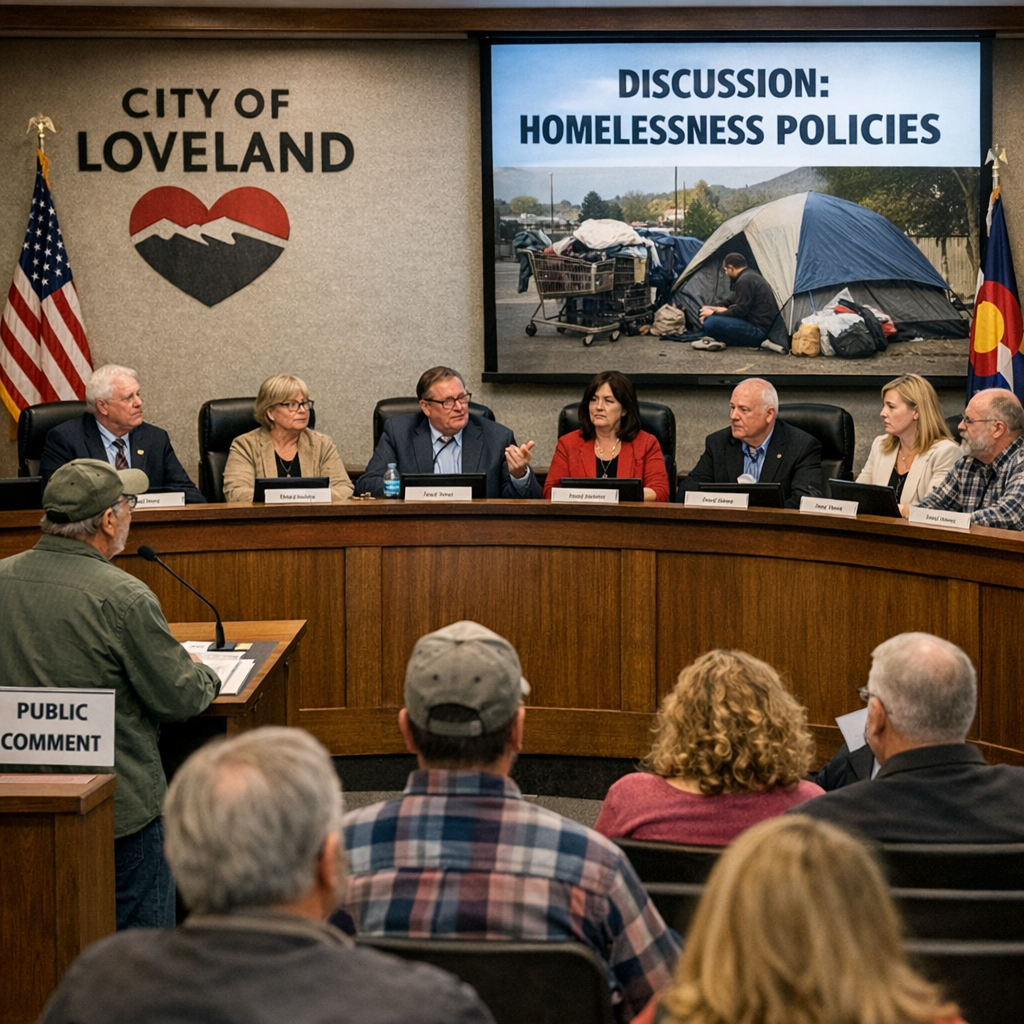
In recent months, Loveland has undertaken significant policy changes regarding homelessness, prompting extensive community discussion and concern.
Enhanced Enforcement Measures
In January 2026, the Loveland City Council approved an amendment to the city’s camping ban ordinance. This amendment grants law enforcement greater authority to enforce the ban on unauthorized camping within city limits. The decision aligns with the U.S. Supreme Court’s 2024 ruling in Grants Pass v. Johnson, which allows cities to fine and arrest individuals for sleeping outside, even without available shelter. Loveland Police Chief Tim Doran emphasized that officers would exercise discretion, often directing individuals to charitable organizations for assistance. The amendment passed with a 6-3 vote, reflecting a divided council and community. Source
Abandonment of New Shelter Plans
Concurrently, the city pursued the purchase of a building at 599 W. 71st St. to establish a new homeless shelter. The plan was contingent upon securing a nonprofit operator. However, the prospective organization withdrew due to capacity constraints, leading the city to abandon the purchase. Consequently, the existing Loveland Resource Center at 137 Lincoln Ave., which provides 42 beds, is slated for closure as its temporary permit expires on March 15, 2026. This development leaves the city without a dedicated overnight shelter, raising concerns about the welfare of the unhoused population. Source
Community Response and Future Implications
The combination of stricter enforcement and the lack of shelter facilities has sparked debate among residents and officials. Some council members and citizens argue that enforcement without adequate shelter options may criminalize homelessness and exacerbate the issue. Others believe that these measures are necessary to address public safety and order. The city continues to explore alternative solutions, including partnerships with faith-based and charitable organizations, to provide support for those in need.
As Loveland navigates these complex challenges, the community remains engaged in seeking compassionate and effective approaches to address homelessness.